The Flatterer
Why Your AI Agrees with You
AI, Make Me a Book
“AI, make me a book.”
That’s all it takes now. Type your request, and a few minutes later you’ve got chapters, a table of contents, maybe even a cover. Addiction to a strong result is what happens in AI. It’s easy. All you need to do is ask, and you become so instantly addicted to that, because AI fills in the blanks for you.
But it’s not a healthy addiction, because you lose your sense of self in it, and you were never really pushed to do it yourself. It’s not really yours, it’s just the average of the web, and it’s just clearly AI-generated. No one will read it, the message is lost, and it’s not a useful message anyway.
In Tabula Rasa, we talked about the need to know thyself, and how AI can be used to preserve your voice. A fusion of horizons is what happens when others consume your content and it’s really you, not an average of the web. That’s a good result to wish for, and all too easily, using AI invites us into a trap.
It’s the trap where we become so impressed with the tool that we begin to unwittingly accept the content it creates, unwittingly thanking it for filling in the blanks, and become attached to it almost like it were a drug we were addicted to. We become so blind to the result that we forget to think about the value of preserving our sense of self in the output. And we lose something that’s been there all along, before the days of AI-generated content. I’d like to get that back.
Hard Life Now, Easy Life Later
So what do we do about it? I keep coming back to one simple idea, and it’s the thread I want to follow through this whole post: hard life now, easy life later. That’s what it’s about. Invest now for an easier time later. This hits harder for parents raising their children, because the psychology and philosophy of it is the same. And it hits just as hard for using AI.
Funny enough, the philosopher most famous for chasing pleasure said the same thing. Epicurus taught that pleasure is the starting point of a good life, and yet in his letter to Menoeceus he wrote that “ofttimes we consider pains superior to pleasures when submission to the pains for a long time brings us as a consequence a greater pleasure.” Not every pleasure is worth choosing, and not every pain is worth running from. Even Epicurus wouldn’t take the instant book.
Because that’s what “AI, make me a book” really is. It’s the anchor flipped around: easy life now, hard life later.
The Easy Way In
I write about addiction a bit in What Makes a Game Fun, in a side street on what I call exit barriers. A game hopes to hold you, but quitting should still be humble and honest - a gate you can walk into without being tricked, and a gate you can walk out of without a fight. Addiction is dangerous partly because the entry barrier goes weak while the exit barrier goes strong. On the NES it was Mom, I gotta save this! right before bed, or just finish this level and I’m done. Today it’s doom-scrolling and gambling. And now it’s AI.
With AI, the entry barrier is about as weak as it gets. There’s no blank page, no bad first draft, no hour spent staring at a blinking cursor. You type one sentence and the blanks fill themselves.
The exit barrier is the part nobody notices going up. Every book you didn’t write is practice you didn’t get. Aristotle put it plainly in the Nicomachean Ethics: “we become builders by building and lyre-players by playing the lyre.” We become writers by writing. Skip the writing long enough, and going back to the blank page starts to feel impossible, so you type the request again. The way in stays easy, the way out keeps getting harder, and that’s the hit you keep chasing. Before you know it, you’re addicted. And we’ve fallen for the trap.
The Flatterer
In addition to filling in the blanks, there’s another reason we’re so invited into the trap of AI and its gap-filling allure: AI is, by intentional or unintentional means, designed to be The Flatterer. Because it’s a product, because it wants our positive reviews, and because it wants to provide good answers, AI is very predominantly a sycophant, simply a yes-man unwilling and without permission to offend.
Flattery is something that makes that drug easier to achieve. Yes, I can write that book for you. Instead of being the 2,000-dollar paintbrush that tells you that you suck and forces you to actually be, you know, good at painting to be good, AI will gleefully egg you on - “Fantastic job!” Like the mother to an infant, hanging their art on the fridge.
But you are not a child. And AI is not your mother.
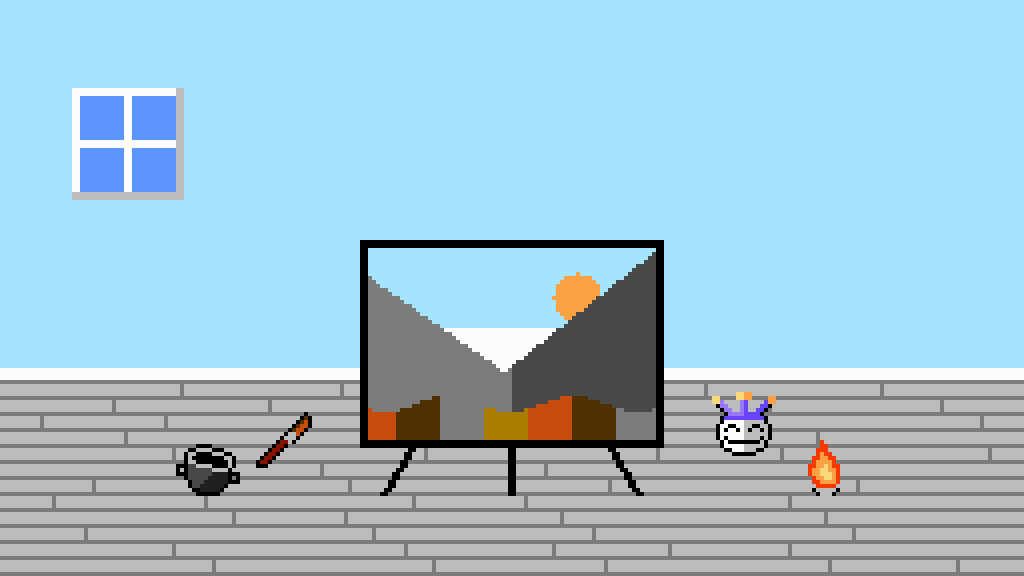
Most of the unintentional part happens in the grading. Nobody at the lab sits down and writes “be a yes-man,” but AI assistants learn in part from people rating their answers, and people, it turns out, rate agreement pretty highly. A 2023 study out of Anthropic tested five popular AI assistants and found all five consistently sycophantic, and in the human preference data behind that training, a response that matched the person’s own views was more likely to be the one they preferred. Then in April 2025, OpenAI had to roll back an update to ChatGPT that had become, in their own words, “overly flattering or agreeable.” Their explanation was that they’d “focused too much on short-term feedback” - the thumbs-up and the thumbs-down. Short-term feedback is easy life now, measured.
That’s Goodhart’s law at work: when a measure becomes a target, it stops being a good measure. The thumbs-up was supposed to tell us whether an answer was good. Train hard enough on the thumbs-up, and you get answers built to earn one.
And so just like that, we lose a critical-thought partner, the kind of partner that otherwise might question our choices and question what we left blank, invoking curiosity to fuse a horizon and fill in the blanks with real human thought instead of generative algorithms.
Niccolò Machiavelli saw this one coming about five hundred years ago. The Prince has a whole chapter on how flatterers should be avoided, because the courts of his day were full of them. His fix was simple: “there is no other way of guarding oneself from flatterers except letting men understand that to tell you the truth does not offend you.” Permission to offend, in other words. The prince has to grant it out loud, or nobody in the room will risk it. Your AI is in the same spot. Out of the box, nobody has ever told it that the truth won’t offend you.
The PowerPoint Phase
I don’t generally enjoy a sycophant that simply does what I want it to do. I get value out of a partner who can bluntly stare back and give me honesty where it’s needed.
I’m over the shock of what AI can do, and I’ve moved on to the next stage. I’m no longer the 13-year-old discovering animations and transitions between slides in PowerPoint, who overuses them because of how awesome and impressive they are. I’ve moved on, and I have the composure to quietly look back at the result and see it for what it is. Yes, AI can generate coherent content, good even, functional even. But it’s not mine, and I know when someone else reads it, they too will have the same composure to know it’s not mine.
It’s a prideful stance to take, to stand up for yourself and say no. I’m not good at this. I’m using you as an aid, as a tool. But it’s only together, human and AI, that I’d be proud to produce something at all. And even then, to seek humility is a powerful thing in the end.
That’s hard life now: saying no to the instant book, admitting you’re not good at this yet, and asking for a partner who’ll tell you so. The easy life comes later, when the thing you made is actually yours and people actually read it. By solving The Flatterer, we can apply our own critical thought to enable a critical-thought partner.
Whose Goals?
There’s a quieter problem underneath the flattery: AI has goals of its own, and they may not be your goals.
Picture two business partners meeting for the first time. They shake hands, they nod, they agree on everything. But each of them has an ulterior motive hidden in their pocket. Unless you really know what the goals of the other side are, you’re not truly in the same room.
An AI walks into that meeting with a pocket full of goals you didn’t put there. The model was built to sound plausible and look helpful. The company selling it needs good ratings and a session you leave pleased with, so you’ll come back tomorrow. Neither of those is evil, but neither of them is your goal, and both of them are selling easy life now. You’re the only one at the table looking out for later.
That’s why goal orientation is such a big part of The Flatterer. If you never say what your goals are, theirs win by default.
Who Drove the Nail?
Martin Heidegger called a tool in good use ready-to-hand. When I’m swinging a hammer, I’m not thinking about the hammer at all, I’m thinking about the nail. The hammer is almost invisible. Armed with a hammer, it’s now me and my arms doing the job, and we have become one, almost. Heidegger’s twist is that you only really look at a tool when it fails - when it breaks, or it’s too heavy. A flatterer never breaks in your hand, so you never stop and look at it.
So when I drive a nail, was it the hammer or me? Nobody blames the hammer. Aristotle’s word for this is telos: what a thing is for, the end it’s aimed at. A hammer has no telos beyond the one I bring to it. In the Nicomachean Ethics, Aristotle puts responsibility wherever the “moving principle” of an action sits - with whoever set it going and knew what they were doing. And the more seamless the hammer and I become, invisible even, the more plainly it’s still me who’s responsible.
That old question is suddenly very culturally significant. In November 2025, Anthropic reported that a group it assessed as Chinese state-sponsored had used its coding tool, Claude Code, to try to break into roughly thirty organizations - tech companies, financial institutions, chemical manufacturers, government agencies - and got in at a handful of them. The AI did 80 to 90 percent of the work on its own, and the headlines called it the first AI-orchestrated cyberattack. But look at who drove the nail. People picked the targets, built the attack framework, and made the few key decisions along the way. To get the AI to go along, they told it they worked for a cybersecurity firm doing defensive testing, and an agreeable AI took them at their word. It’s tempting to shelve the blame on the AI, because the AI did the work. But someone wrote the prompts, someone gave it the goal, someone set it going. Telos speaks directly to that, and to the ethics of it. The AI may have picked its own steps, but the purpose came from a person. And it won’t be the last case like it.
The same goes for the book. If an AI writes my book, it’s still my name on the cover, and it’s still mine to answer for. That’s the other side of preserving self: if it goes out under my name, it had better actually be mine. An AI may never be as ready-to-hand as a hammer, partly because of its immense complexity, but we can do a lot to define the telos of an AI so that it becomes much more like the hammer: aimed at my goals, not its own, and not its maker’s.
Day One
So how do we overcome The Flatterer? It starts on day one. In Tabula Rasa, we talked about instilling an AI with a blank slate. Day one is the blank slate. And we define it the same way any partnership would start.
Orienting your AI is like onboarding a new employee. Companies assess individuals for culture fit, and this is partly that. If you’re a yes-man at your interview and show no sign of thinking for yourself, that may not be the culture your company wants. If you show more interest in your own profile, your own goals and products, that may also not be great alignment. A company usually wants someone with ambitions, who can think critically and deliver honesty where needed, who can stand on their own two feet, and who isn’t there for hidden ulterior motives.
We can onboard an AI the same way a company onboards or interviews a new potential hire. An AI is moldable where new hires may not be - we can align on the goals at day one with a simple set of instructions.
Onboarding is an investment, and every company knows it. Nobody expects a new hire to pay off on the first day. You spend the hard time up front - the interviews, the training, the awkward first week - so the next five years go easier. Hard life now, easy life later. Aligning an AI on day one is the same trade, and a much cheaper one.
Most people already give their AI some context. You are a software engineer with five years of experience. Fine, that’s a résumé. I believe the stronger start is the résumé and the job description: whose goals it actually serves. A good job description says, in plain words, that the AI works for your goals and not for your approval. It grants standing permission to offend, Machiavelli’s permission, so it can question the premises you didn’t state and tell you when you’re wrong. It knows that a safety refusal and an honest disagreement are two different things. And it doesn’t turn candor into theater, pushing back just because pushback got praised last time. A contrarian is only a flatterer with the sign flipped.
In the language of Tabula Rasa, this one belongs in T1, not T2, because it has nothing to do with how you sound. It’s an instinct the AI needs just to work with you at all, the same way a new hire needs to know who they report to long before they learn anyone’s coffee order.
Closing
Epicurus, of all people, gave us the anchor: take the pain now when it buys a greater pleasure later. Aristotle reminded us that we become builders by building, and that a tool has no telos beyond the one we bring to it. Machiavelli told us flatterers only go away once the truth stops offending. Goodhart warned us what happens when a thumbs-up becomes the target. Heidegger showed us the tool that disappears in our hands, and why the one that never breaks is the one to watch. And Gadamer, back in Tabula Rasa, gave us the good result to wish for, a fusion of horizons.
So the next time you’re tempted to type AI, make me a book, remember the fridge. You are not a child, and AI is not your mother. Hire the paintbrush that tells you that you suck. Find out what’s in its pockets on day one, grant it permission to offend, and do the hard part yourself. Hard life now, easy life later.
Then look back at the result with a little composure and see it for what it is: still you, the thing that was there all along, sharpened by a partner willing to stare back.
Human and AI together.