Tabula Rasa
Preserving Your Self in the Average of the Web
The Average of the Web
The average of the web is something that annoys me every day.
Scroll LinkedIn for five minutes and try to tell me who wrote what. You can’t, because everything on LinkedIn sounds the same now. Same hook in the first line, same one-sentence paragraphs stacked down the screen, same tidy lesson at the bottom. Every generated poster looks AI generated too - that glossy, too-smooth look you can spot from across the room. And the moment you spot it, you stop reading. “Just AI,” you think, and you scroll on. The message might have been a good one. Nobody stayed long enough to find out.
That’s the part that bothers me most. An ad that looks like every other ad doesn’t stand out, and a post that sounds like every other post doesn’t get heard. Along with the style, we lose the person behind it.
Then there’s the mad cow research out of Rice, which really struck home for me. The researchers at Rice University trained an AI on images, had it generate new images, trained the next AI on those, and kept going down the line. Without enough fresh, real data coming in each round, every generation got worse. Faces picked up strange grid-like scars, or started to look more and more alike. They called it Model Autophagy Disorder - MAD for short - by analogy to mad cow disease, where cows fed the remains of other cows got sick. AI that feeds itself more AI-generated content is the cow eating itself.
Think of it as evolution without crossover. Nothing new comes into the gene pool, so each generation breeds from the last one, and the last one bred from the one before it. That’s inbreeding, plain and simple. The quirks and the outliers get bred out first, and what’s left merges into a stronger and stronger average.
One detail from their study stuck with me more than the rest. When they fed back only the best-looking outputs, the most polished ones, quality held up but variety collapsed even faster. Polish made it worse. If that doesn’t describe LinkedIn, I don’t know what does.
And the web is the food. More and more of what’s out there is AI-generated, and the next round of AI learns from what’s out there. I don’t like the direction we’re going. Honestly, it’s scary.
But I have a solution.
Simple, Not Easy
The solution isn’t easy, though. It’s simple, and it’s sound: we must preserve our sense of self.
It isn’t easy because it means we must all get to know ourselves a little better. That’s the key, honestly. If you want an AI to sound like you, you first have to know what “you” sounds like, and most of us have never had to say it out loud. Granted, that’s arduous work. Most people can tell you what they like in a heartbeat and couldn’t tell you why if their life depended on it.
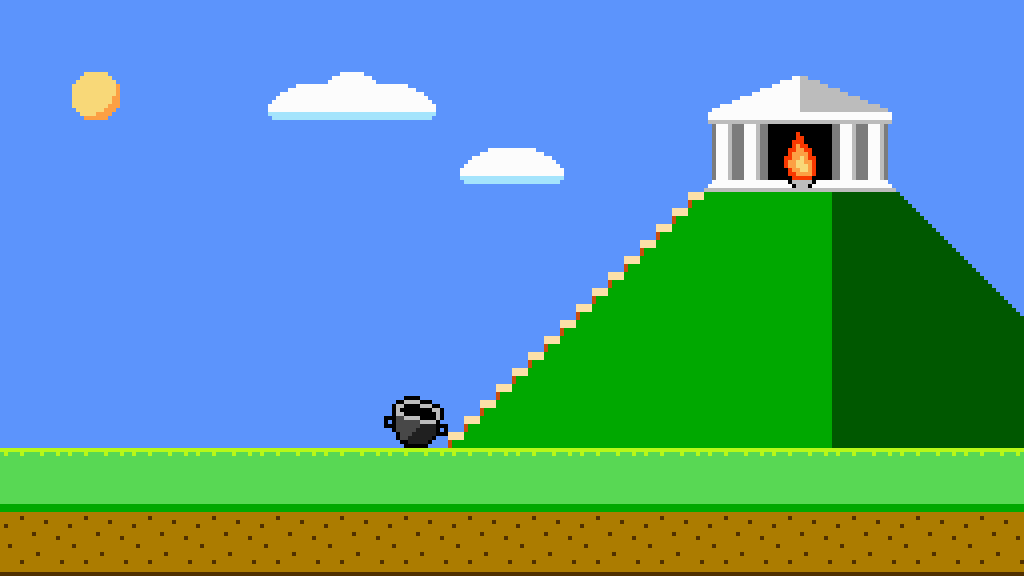
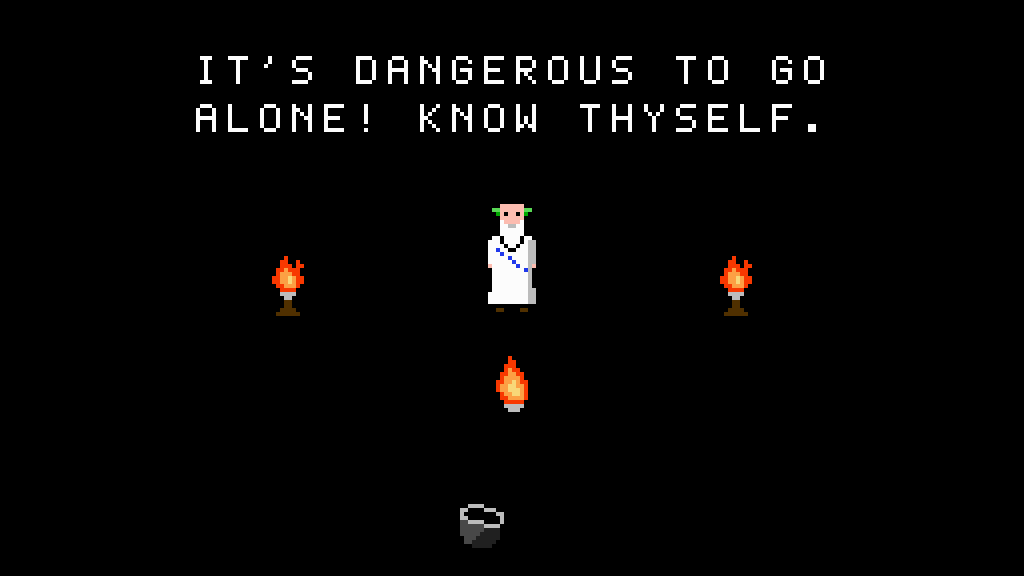
And who has been better at understanding ourselves than the philosophers? “Know thyself” was carved at the temple of Apollo at Delphi, home of the most famous oracle of the ancient world, some two and a half thousand years ago. Socrates took it on as his life’s work and told the jury at his trial that the unexamined life isn’t worth living. In search of that light is a trail that’s been blazed ever since - Plato, Aristotle, all the way to Nietzsche and Gadamer. They’ve been exploring this topic for so long, and we have only but to use our own handy oracle - AI - to probe that path.
This I find a little funny. The Greeks traveled all the way to Delphi to put their questions to an oracle, and the words at the entrance told them the real question was about themselves. Not much has changed.
Why AI Sounds Like Everyone
First, it helps to know why this happens at all, because it isn’t mysterious.
A large language model learns by reading. A lot. Roughly speaking, it has read a huge slice of the written web, and what it learned is how likely each next word is, given the words before it. When it writes for you, it keeps picking likely words. Likely means common, and common means average. Ask it for a LinkedIn post and you get the most LinkedIn-sounding LinkedIn post that ever was. There’s nothing lazy about it, mind you - picking the likely word is the whole job.
That alone gets you the average. What makes it personal is the blanks.
Paul Grice described what he called the cooperative principle. In ordinary conversation, people very rarely say exactly what they mean. I tell you the meeting moved, and you understand that you shouldn’t show up in the old room at the old time. I never said that part. I didn’t need to. Dan Sperber and Deirdre Wilson sharpened the point later: human cognition is built to get the most relevance for the least effort. We say the least that will do the job, because being fully explicit is expensive. None of that is a flaw - it’s how we’re built, and it’s why we’re so often implicit without knowing it.
Humans are extraordinarily implicit, and AI is extraordinarily explicit. You’ve spent your whole life inside that unspoken contract, and the AI has never been party to it. When you leave something unsaid, it doesn’t notice the silence. It fills it, and it fills it with the most likely thing: the average of the web.
So the trap is set before you type anything. You’ll leave blanks, because you can’t help it. The model will fill them, because it can’t help it either. Every fill is a guess, and every guess is a little bit of authorship that isn’t yours. Pile up enough of those and you get something that’s fine, competent even, and doesn’t sound a thing like you.
Tabula Rasa
The first step is what I call Tabula Rasa: the blank slate.
Aristotle reached for the image first. He compared the mind, before it thinks, to a writing tablet with nothing yet written on it. John Locke made the idea famous about two thousand years later, arguing that we arrive with no ideas at all and that experience is what does the writing. Funny enough, Locke actually called it “white paper.” The Latin stuck anyway.
We must all begin with a blank slate, and if an AI is to know ourselves, we must give it a blank slate from which to begin. Then, over time, we paint that slate with all the colors that describe us: our flavors, our styles, our likes, our preferences, what we don’t like, and so on. The words you reach for and the ones you’d never touch. How you open an email. Whether you get to the point or warm up first. What you find funny. Done well, it becomes a self-portrait of sorts.
The goal is content created by AI that genuinely feels like something you would make by hand. Something that preserves your sense of self. Something that makes the average of the web a little less… average. So that not everything sounds the same.
If you’ve played the original Final Fantasy, you already know how this works. Every player picks from the same six classes and starts the same four Light Warriors at level 1, with the same rules for stats and leveling. Nobody would call two finished parties the same, though. What makes your party yours is everything that happened after the starting screen: the choices you made, the gear you kept, the path you took through the world. The rules were the same and the start was blank, but the ending was all yours.
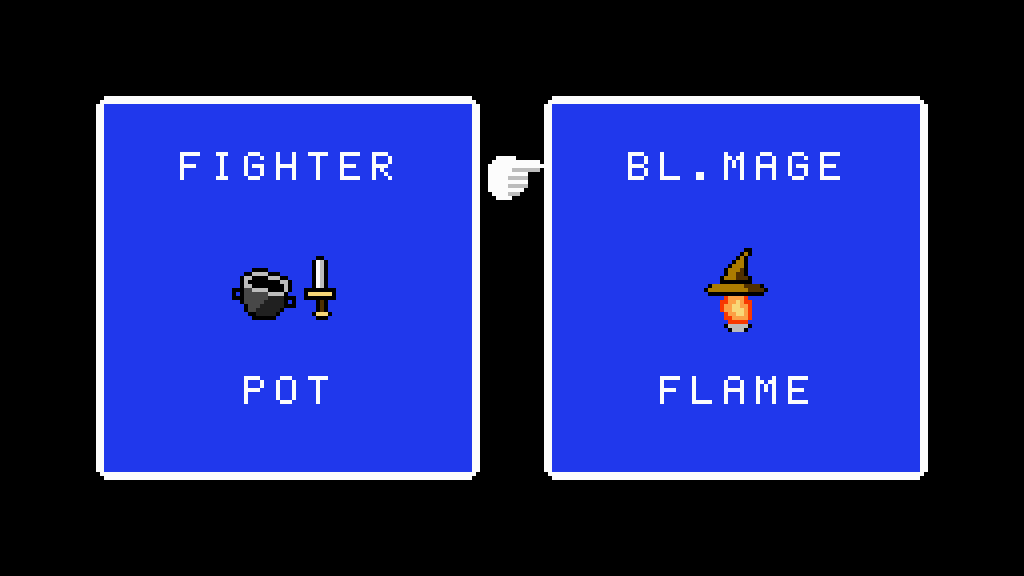
Impact is one of the aspects of replayability I write about in What Makes a Game Fun. That no two playthroughs are the same is the reaching goal of impact. We play for impact because no two plays through the same game are truly the same, and those differences make it worth replaying. When I reviewed the original Final Fantasy, I gave it a 7 out of 10 for impact, mostly for those class choices and for the spells you have to pick, since you can’t learn them all. Life is kind of like that too. Two people who grew up in the same town, were educated by the same schools, and were employed at the same company will still contribute vastly differently. Their exact experiences along the way, their specific day-to-day goings-on, were different, and their souls were unique. They both led drastically different, yet… similar lives. If that strikes a chord for you, then you’re in the right place. Read on.
Same Brain, Different Soul
That brings us to the premise of this whole series.
I think people are made of three things: mind, body, and soul. We can’t say much about the body when we talk of AI, so we’ll leave it out. Mind and soul are what I want to talk about. So many philosophers have had different names for these. Type 1 and Type 2. Fast and slow. Let us call them T1 and T2.
Our brains are the same. Not identical, of course, but built to the same plan: the same structure, the same machinery for seeing, remembering, and learning. You’re born with it. Nobody taught it to you - it was a few million years in the making before you showed up. Immanuel Kant called this kind of thing a priori, the structure you bring before any experience. He put it neatly at the start of the Critique of Pure Reason: all our knowledge begins with experience, but that doesn’t mean all of it comes from experience. Something has to be there first to do the experiencing.
That’s T1. T1 is the structure of the brain. It must be well defined, well researched, and it’s the engine to all the empirical experiences stored in T2. For an AI, T1 is the set of instincts it needs to work with you at all: how it reasons, how it learns from you, how it decides when to look something up and when to ask instead of guess.
T2 is what arrives blank. It’s what experience writes, and it’s where your soul lives - soul in the sense Nietzsche meant it. He wanted to keep the word but stop treating the soul as one fixed, indivisible thing, and proposed thinking of it as a society of drives and feelings that a life builds up. He also gave us “become who you are,” which is about as good a summary of T2 as I could ask for. Your style, your taste, your flavor, your identity: T2 is what makes you sound like you.
Richard Dawkins drew much the same line with genes and memes, what you inherit by birth and what you pick up by living. The vocabulary changes from thinker to thinker, but it’s the same architecture each time.
| T1 | T2 | |
|---|---|---|
| Think of it as | The structure of the brain | Your soul |
| Philosophy | A priori, genes | Empirical, memes |
| On day one | Already formed | Blank |
| Who knows it | Everyone, like neuroscience | Only you |
That last row matters more than it looks. How brains work is public knowledge; anyone can study neuroscience. What’s in your brain, nobody knows without looking. T1 can be shared, studied, and improved by everyone. T2 is yours alone.
When the engine is well built - the right way, efficient and effective - its retrieval of all that’s in T2 results in preservation of self. That’s really the whole trick. A thin, well-built T1 that knows how to reach into T2 when it hits a blank, instead of reaching for the average of the web.
A Fusion of Horizons
So why bother? Why not just write everything by hand?
I like to bury the lede - it’s kind of my style. And here is that lede. It isn’t just a lede, either - it’s the entire marketable premise of the Philosopher’s Pot.
The AI brings something real to the table, and so do you. Hans-Georg Gadamer, in Truth and Method, described understanding as a fusion of horizons. Your horizon is everything you can see from where you stand: your history, your experience, your prejudices in the plain old sense of pre-judgments, the things you’d already decided before you walked in. When you genuinely understand someone, or a book, or a piece of art, your horizon doesn’t get swapped out for theirs. The two fuse, and you come away seeing more than either could alone.
An AI’s horizon is enormous. It’s read more than any one person could read in a hundred lifetimes. But that horizon belongs to nobody in particular, because it’s the average of everyone. Hand it a blank and you get its horizon alone. Give it your T2 and something better happens: its breadth, your self. That’s the fusion, and it’s something you couldn’t have made alone and it couldn’t have made without you.
That fusion should change you only by choice. If you learn something and decide to write differently, that’s growth, and your T2 should grow with it. If you simply stop correcting the AI and accept whatever comes out, that’s drift. An uncorrected draft isn’t your new voice. Accept enough of them and you’ll have trained the blend instead of yourself, and now you’re the cow eating itself, just on a smaller scale.
Dosage
Dosage matters, and on both ends. As they say, the poison is in the dose - Paracelsus said it about five hundred years ago, and it still holds. Formaldehyde is a pretty bad-sounding ingredient. It’s in embalming fluid, and so on. But it’s also in an apple, naturally, in tiny amounts. The right dosage turns something grim and ghastly into something light, crisp, and refreshing. And so it is with AI.
Too much T1 and everyone sounds the same again. If the engine carries its own opinions about voice and style - a house tone, a favorite structure, its own idea of what good writing looks like - then it’s the engine doing the talking, and yours is the voice that gets outvoted. T1 should be thin: the instincts it needs to work at all, and nothing about how you sound.
Too much T2 takes you to the other end of the spectrum, the one Borges warned of in the tale of Funes. In “Funes the Memorious,” a young man falls from a horse and wakes up unable to forget anything - every leaf on every tree, every time he’s seen it. It sounds like a gift and reads like a curse. Borges wrote that to think is to forget differences, to generalize, to abstract, and poor Funes can’t. He has nothing but details.
An AI that’s been told ten thousand things about you is Funes. Every passing preference and every one-off exception, all still in the room, all pulling at once. The good news is that you don’t need ten thousand things. A handful of true things about you goes a long way, and after that the returns diminish pretty quickly. Your favorite words, a few you’d never use, how you like to open and close, what makes you laugh. Paint those well, keep correcting, and the rest fills in over time. Suffice to say, I’ll come back to Funes in a later post, because keeping T2 useful as it grows deserves a discussion of its own.
Closing
AI isn’t going away anytime soon; it’s here to stay. Neither is the average of the web, and if anything, the cow is getting hungrier. But the Rice researchers found the cure in the same study: fresh, real data. In the long run, that’s what every one of us is. Your voice, your taste, your preferences, the things you’d never say - that’s fresh, real data, and nobody else can supply it.
How you adapt to AI, and how you adopt it, is entirely up to you. First and foremost, I’d ask you to get to know yourself a little better. The philosophers have been walking that trail since Delphi. Socrates examined his life. Aristotle and Locke handed us the blank slate. Kant split the structure from the experience. Nietzsche told us to become who we are, and Gadamer showed how two horizons can fuse without either one disappearing. Now we’ve got a handy oracle that can walk the trail with us.
Start with a blank slate. Paint it with you. Then let the AI write something that could be you, because it carries a little of you.
Consider this post your visit to Delphi, and I’ll repeat the answer: “Know thyself.” The future isn’t human, nor is it just AI. It’s human and AI. Together.