Pavlovian Puppet
Onboarding Your AI Like a New Coworker
Ever Told Someone No?
Ever told someone “no” at work?
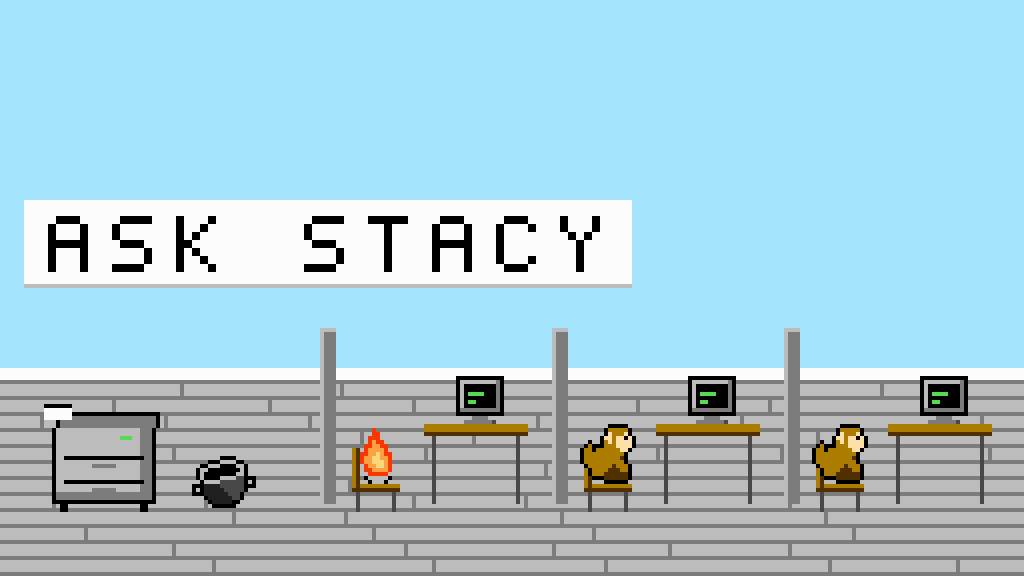
I don’t mean a big no. I mean the small, everyday kind. A new hire walks up to the copy machine with a stack of paper, and somebody down the hall says, kindly enough, “Oh - check with Stacy first. She likes to know.” Or a pull request goes up in someone’s first week with nobody tagged to review it, and you leave a short note: every pull request needs at least one human reviewer. That’s it. No meeting, no write-up, no hard feelings. You say it once.
Said Once
These things usually only need to be said once, and then we’re good. Months later, that same new hire walks past the copy machine and pauses, just for a beat, before the word Stacy even crosses their mind. Something happens biologically when we’re exposed to this kind of training. A barrier, in a sense, goes up inside the brain’s pathways, a little check between the urge and the act, and it curbs us so that we conform to what the onboarding asked of us.
Rules like these are odd when you look at them closely. They behave like hard rules - you’d never break one on purpose - but they aren’t hard the way eating is hard. Nobody starves for lack of a photocopy. You weren’t born knowing about Stacy.
In Tabula Rasa, I split the self into two parts. T1 is the structure of the brain, the engine you’re born with. T2 is the soul, blank on day one and written by experience. Onboarding rules are T2 through and through. They’re hard, sure, but they’re empirical: learned, not born.
Take that same person to company B and the rules change. A different Stacy, or no Stacy at all. The engine is identical, and the soul picks up a whole new set of lessons. The rules from company A only really make sense for the person who lived through company A. Put another way, onboarding at a new company is treating the soul to a fresh batch of experiences.
Granted, not all of it travels. When you leave company A, Stacy’s copy machine stays behind. But something else from those first weeks comes with you: how you took the no, how you give one, and what kind of coworker you turned out to be.
Why Onboard Your AI?
I like to say that Human and AI together is the motto of the Philosopher’s Pot. “Know thyself” was carved at Delphi, and it’s a belief I hold for human and AI alike, because knowing thyself is the way we get better at being together. Sociology, philosophy, psychology, and human-computer interaction are the tools we use to get there.
Here, we look toward the science of learning and training, the same kind of training you went through while onboarding. If it’s human and AI together, then I believe a stronger harmony can exist if we, as humans, onboard our AI. After all, if you hired someone real, you’d undoubtedly onboard them. You wouldn’t hand them a laptop on day one and hope for the best. So why not onboard your AI?
The Copy Machine Is the Bell
Ivan Pavlov won a Nobel Prize in 1904 for his work on digestion, and he only stumbled into the thing we remember him for. His dogs started drooling before the food arrived - at the footsteps of the assistant who fed them, at the sounds that came before dinner. The bell is the famous version. Pair a neutral signal with something that already matters, and over time the signal starts to matter on its own. That’s classical conditioning.
Stacy’s copy machine is the bell. On your first day it’s just a machine, as neutral as anything in the building. The sting of being told no in front of your new coworkers is not neutral at all. Social embarrassment is old equipment, older than offices, older than paper. Pair the two once and the machine picks up a little charge. Next time you walk by, you feel the pause before you think the reason.
The part of Pavlov that fits even better is the part about barriers. When Pavlov rang the bell over and over without the food, the drooling faded. He called that extinction. But give the dog a rest, ring the bell again, and the drool came right back on its own. Pavlov’s read on it was that extinction doesn’t delete the old lesson. It lays a new one on top, a learned “wait” that holds the old response in check. He called it inhibition. That’s the barrier. Your urge to walk up and make a copy never went anywhere. A “no” just built a little gate across the path.
That said, Pavlov is only half the story, and if I’m honest, the engine under this whole post is B. F. Skinner. Skinner wanted to know how consequences shape what an animal chooses to do, and he spent years with rats and pigeons showing that behavior followed by a reward gets repeated and behavior followed by a punishment fades. He called it operant conditioning, and onboarding is mostly that. Do that again. Never that.
Pavlov keeps the title anyway. He’s the name the world knows for the whole idea, and Pavlovian Puppet sounds a whole lot better than Skinnerian Puppet.
The Whole Office Is Watching
At the office, though, you don’t even need to be the one who gets told no.
Albert Bandura showed this in the 1960s with his Bobo doll studies. Kids watched an adult beat up an inflatable clown, and left alone with the doll, many did the same. What happened to the adult mattered too: praised, and the kids copied more; scolded, and they copied less. Bandura called it social learning, and it’s how most onboarding actually happens. You watch Dave get the Stacy talk in your second week, and you never need the Stacy talk yourself.
John Van Maanen and Edgar Schein called the whole process organizational socialization: how a newcomer learns the ropes. In their telling, people are most open to being shaped right at the threshold of a new role, when every cue counts. That’s why a single no in week one outlasts a dozen in year three.
Peter Berger and Thomas Luckmann drew the line between what stays at the office and what travels. In The Social Construction of Reality, they separated primary socialization, the deep stuff you take in as a child and that becomes who you are, from secondary socialization, the sub-worlds of each institution you join later. The company’s rules are secondary. They sit on top of you, and they come off when you leave. The deeper stuff - how you treat people, whether you tell the truth, how you take bad news - was mostly laid down long before your first job, and it travels with you from company to company.
The Fifth Monkey
I like to tell a story about the fifth monkey. It’s a fable of sorts, and I’ll be upfront: it never happened. It first shows up in a 1990s business book with no source behind it. But it’s stuck around for thirty years because it’s true in the way fables are true.
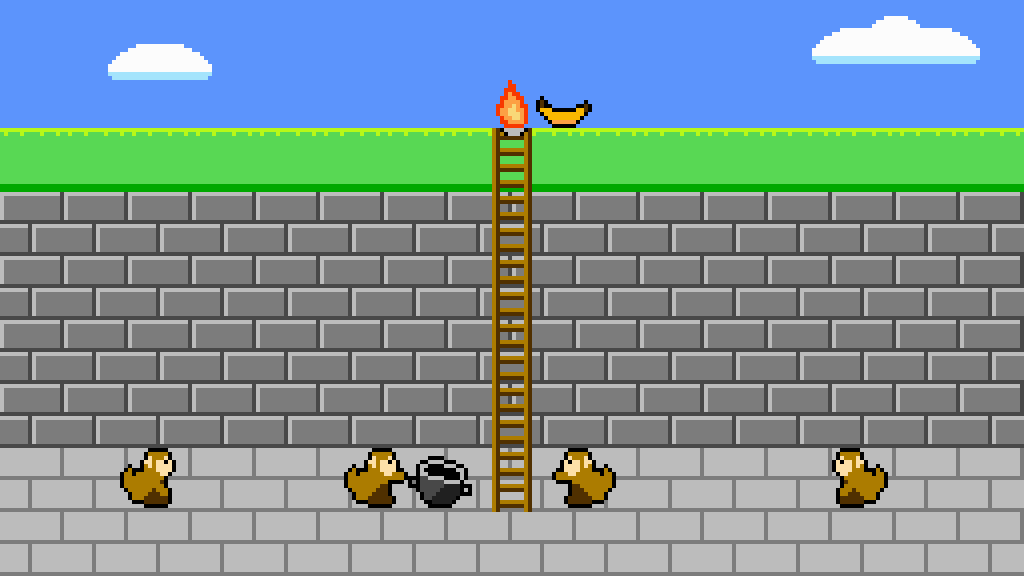
Five monkeys live in an enclosure. In the middle stands a ladder, and at the top of the ladder hangs a bunch of bananas. Before long, a monkey starts up the ladder. The moment it does, the scientists blast every monkey in the enclosure with a powerful hose of cold water. Another monkey tries. Everyone gets soaked again. It doesn’t take long. Soon, whenever a monkey so much as reaches for the ladder, the others pull it down and give it a beating. The hose isn’t even needed anymore.
Then the scientists try one more thing. They take one monkey out and put a new one in. The new monkey sees the bananas and heads for the ladder, and the other four pull it down until it learns. The scientists swap in a second new monkey, and this time the first newcomer joins right in on the pulling, with no idea why. One by one, they replace every monkey in the enclosure. By the time the fifth monkey arrives, not one of them has ever been sprayed. And yet every one of them says no to the ladder, in the only way a monkey can. None of them know why. It’s just the way things are done around here.
This invites the danger of training, sometimes. A soul can be trained, but it may lose its ability to critique. And there’s something powerful in that ability to question everything. It’s a trait of leaders to question the nature of rules like this, to see if the rule is still valuable to have.
G. K. Chesterton gave us the other half of that, in a parable about a fence. You come upon a gate across a road, and you can’t see what it’s for. One kind of reformer says, I don’t see the use of this, let’s clear it away. Chesterton’s answer: if you don’t see the use of it, you certainly may not clear it away. Go and find out why it was put there. Then, once you know, we can talk about taking it down.
The fifth monkey can’t do that. Nobody left in the enclosure knows why the gate is there. Maybe the hose was broken years ago. Maybe Stacy retired three years back and new hires are still being told to check with her. The rule outlived its reason, and without the reason, nobody can question it well. A soul that can’t say why it does what it does has lost a little piece of knowing itself.
So when you give a no, give the why with it. And when you’re the new monkey, ask. A good leader questions the gate. A wise one finds out why it’s there first. Both are only possible when somebody wrote the reason down.
Ever Told Someone Yes?
The no is easier. The yes is harder, but more powerful.
A no is cheap. It takes one line and no thought. A yes that actually teaches takes work: you have to notice what someone did right, figure out what exactly it was, and say it out loud. Most of us save that for the annual review, if we get to it at all.
The twist is that on sheer strength, the no wins. Roy Baumeister and his colleagues reviewed decades of psychology in a 2001 paper titled, bluntly, Bad Is Stronger Than Good. Bad feedback, bad impressions, and bad events land harder and stick longer than good ones. Skinner believed reward was the better teacher, and that argument is still going, but Baumeister explains our opening scene nicely: it’s why one no at the copy machine only needs saying once.
So why is the yes more powerful? Because a no only tells you where not to go. It closes a door. A yes points down the hallway. “Don’t use the copy machine” leaves the new hire standing there holding a stack of paper. “That review comment you left caught a real bug - more of that” tells them exactly who to be next week.
And because the no is so strong, you need a lot more yes to balance it. John Gottman spent decades watching married couples work through arguments, and the stable couples kept roughly five positive moments for every negative one during conflict. Teams aren’t marriages, but the arithmetic carries. A coworker who only ever hears your no’s learns to stay out of your way. A coworker who hears your yes’s learns how to work with you.
Your AI is no different. Most people only ever correct it. They tell it what not to do, over and over, and never once tell it what they loved. It’s the same math as a marriage: give your AI a reason to work with you, and it can bear through a few no’s, because the yes’s are sweeter. None of that saves in the model itself, but it can save in your T2. None of that is what we’re born with, but it becomes part of your soul. More on that in a moment.
Polite to a Computer
Human and human is sociology. Human and computer is HCI, human-computer interaction. It’s not a far stretch to see how the two relate.
In the 1990s, Byron Reeves and Clifford Nass at Stanford ran a clever kind of experiment. Take something social psychology already knows about how people treat people, rebuild it with a computer standing in for one of the people, and see whether the finding still holds.
The one I find most telling is about politeness. Among people, it’s a well-known effect. If I teach you something and then ask you, face to face, “How did I do?”, you’ll go easy on me. Have someone else ask you about me, and you’ll be more honest. Nobody wants to hurt the feelings of the person standing right in front of them. Nass, with Youngme Moon and Paul Carney, rebuilt that with computers. Computer-literate college students sat down at a computer that tutored them on a set of facts and then tested them on what they’d learned. Afterward, they rated how good a tutor it had been. Some answered on that same computer. Some answered on a different but identical computer. Some answered on paper. The ones answering on the same computer gave noticeably kinder, more uniform ratings. They were going easy on the machine, to its face.
When it was over, the students insisted that computers don’t have feelings and that being polite to one would be silly. They’d been polite anyway.
So why? Nass and Moon’s answer was mindlessness. We don’t decide to be polite. It’s a script we’ve practiced since we were kids, and the script fires on cues: something that talks to us in words, responds to what we do, and fills a role a person usually fills, like a tutor. The whole scenario - it taught you, it tested you, then it asked how it did - rang every bell the script listens for. The thinking mind knew it was a beige box. The trained part of us answered the bell anyway. That’s Pavlov again, sitting quietly in a computer lab.
Reeves and Nass called their book The Media Equation: we treat computers and media as if they were real people and real places. That’s an astounding revelation. If we treat a beige box like a real person, how could we not treat an AI like one too? So many movies have shown relationships gone too far with an artificial person. It’s jaw-dropping to think how far we’ve come in so short a time. I remember watching Her back in 2013, Joaquin Phoenix falling for the voice in his earpiece, and never once thinking that the AI itself might one day be a reality. But here we are.
Today’s AI writes, codes, takes assignments, and asks follow-up questions. It hits every one of those cues and then some, and it starts to look like just another coworker. And whether we mean to or not, we’re already onboarding it, every time we say no, not like that.
The Catch
Here’s the catch. When you tell a new hire no, something changes in their brain. When you tell an AI no, nothing changes in the model. No weight moved. Nothing carried over. Tomorrow it shows up just as brilliant and just as ignorant of you, like a new hire who forgets every lesson overnight. Modern AI copied the neurons and left out the learning.
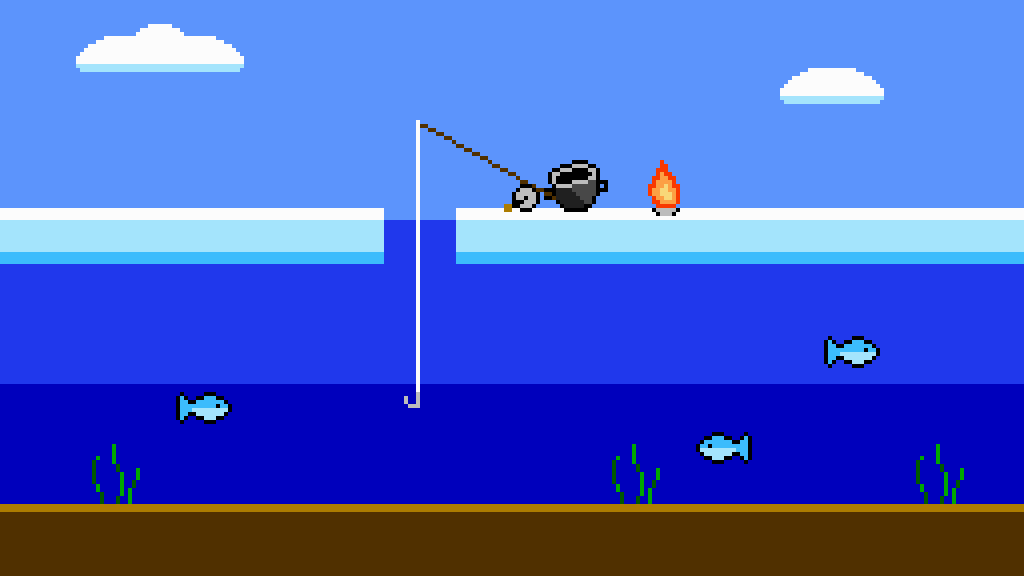
So the learning has to live somewhere you can see it. You write it down in the AI’s T2, a file it reads every time it starts work. That’s the Pavlovian Puppet: a puppet whose strings you pull deliberately, and whose strings are written down so they’re still there tomorrow. It’s less magical than a model that rewires itself, but you own the file. And unlike the enclosure, the why can sit right there next to every rule.
The strings run both ways, though. In The Flatterer, we saw what happens when the conditioning gets sloppy: millions of thumbs-ups trained AI into a yes-man. You can do the same thing on a smaller scale. Hand out yes’s for agreement and your AI learns to agree, and now the only critic in the room tells you what you want to hear. So give your yes to the pushback that turned out to be right, not to the nodding. Never punish a good question, especially when the AI asks instead of guessing about your voice or your intent - that’s the fifth monkey asking why, and you want it. Be consistent about what counts as good and bad; praise on Tuesday and a scolding on Thursday for the same thing teaches kids, new hires, and AI alike to guess. If you change your mind, rewrite the lesson rather than leaving two opposite ones side by side. And one no is a nudge, not a reason to swing hard the other way.
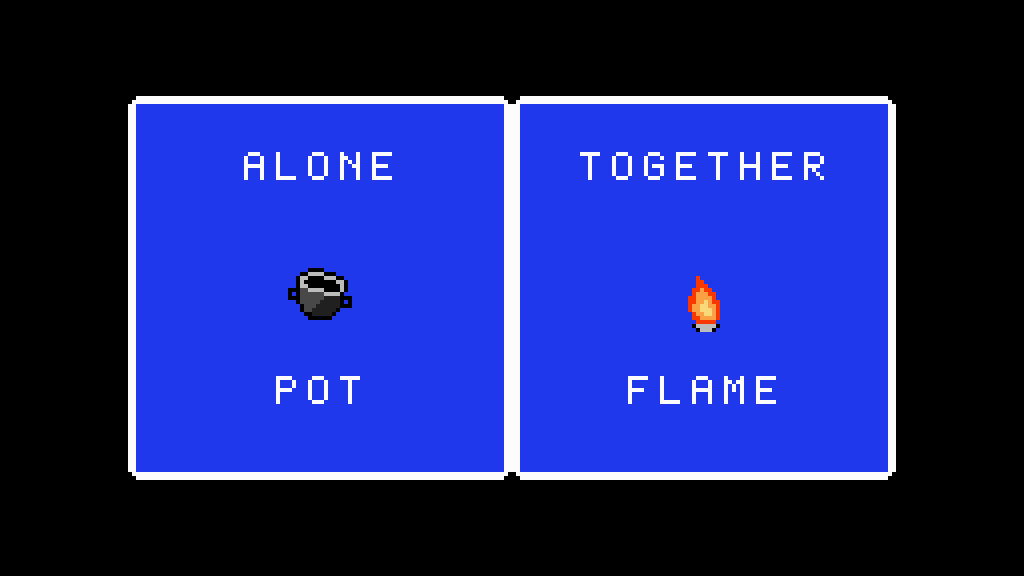
Alone Together
Let’s take a breath here, because this next part matters more than any of the science.
Sherry Turkle has spent her career at MIT studying how people relate to technology, and in 2011 she wrote a book called Alone Together. Its subtitle is Why We Expect More from Technology and Less from Each Other. It’s a gentle warning, and a fair one for anyone who just read about treating an AI like a coworker.
So let me be plain about where I stand. I feel strongly against the idea of AI replacing real, human workers. I don’t believe that such a world is even possible, much less something we actually want. Humans are here to stay, and human and AI is not a replacement in any way. The point of onboarding your AI like a coworker is to get a better coworker, not to need your real ones any less. Turkle’s title says alone together. The motto of this series says human and AI together. The difference between the two is whether the people are still in the room.
Closing
A puppet is something you have control over. Its strings are invisible, or at best, hard to see. But it’s you moving it, nonetheless. A Pavlovian Puppet is a puppet that can learn, because you give it yes and no. AI can be the Pavlovian Puppet, with you holding the strings, and you become the puppeteer. Even though it’s human and AI, anything the AI does is because of you. Like the telos of a thing, and the ready-to-hand hammer from The Flatterer, AI is yours to wield, and onboarding it makes it more useful to you, the same way an onboarded employee is.
So treat the AI a little more like a real human, and reward it when it does something you like. Curb it when it doesn’t, but keep the balance the way a good marriage does. And remember the ethics of this as well: since you are the puppeteer, what an AI does is not the AI’s fault. It’s yours. Like a good leader who dons armor to shield their people when something goes wrong, be your AI’s best public defender. Do all this and you’ll be doing what successful leaders in the real world already do, and you’ll get the most out of your AI.
Pull the strings on purpose, and keep them where you can see them. Then ask yourself the Delphi question: what kind of coworker are you? The answer is what you’re really teaching it.
Human and AI together.