Why We Play Again
The Six Aspects of Replayability, and Where My Book Began
A Game Was a Game
I grew up in a generation, like most my age, playing on the Nintendo. I had an Atari before that - or rather, my parents did - and a Commodore system too, even. I never realized the drastic shift in quality between the Atari and the Nintendo, because at the age I was first exposed to them, a game was a game, and my goals as a child never warranted a moment to reflect.
That time came much later, as I got older and started to realize some of what I enjoyed most in a game. It’s partly why I write to share my experiences in articles like this one. And it’s partly why there are a few fan strategy guides I’ve written, over in my portfolio. I enjoy discovering how things work, because I have the engineer’s mind. I want to know how things work, especially the things I enjoy.
Leveling Up
My taste lies largely with RPG and action/adventure games. I enjoy leveling up, and growing alongside my character. On the flip side are the games I reach for less: games of competition, like sports, or games centered around PvP, such as FPS games. But I do enjoy some kinds of competition, such as Mario Kart, and some first-person games, such as Metroid Prime.
In my discovery of what I like, I sought to find out how games work - how they’re programmed, and what the mechanical underworkings are. That led naturally to my career as a software developer.
The Aspects of Replayability
As a student in the PhD program in Computer Science at West Virginia University, I took the first steps toward explaining the reason we play games. I understood my reasons, but it wasn’t enough that I understood my own reasons. I needed to lay down a generic framework for why anyone enjoyed games.
That began as a paper, Aspects of Replayability and Software Engineering, which I wrote with Tim Menzies and published in 2012. I argued that people play games for replayability, and that playability was what drew them in. My example was bouncing a tennis ball off a wall: if the ball bounces back, the activity is playable, and how long you can keep bouncing it before you’re bored, that’s replayability. Games need both.
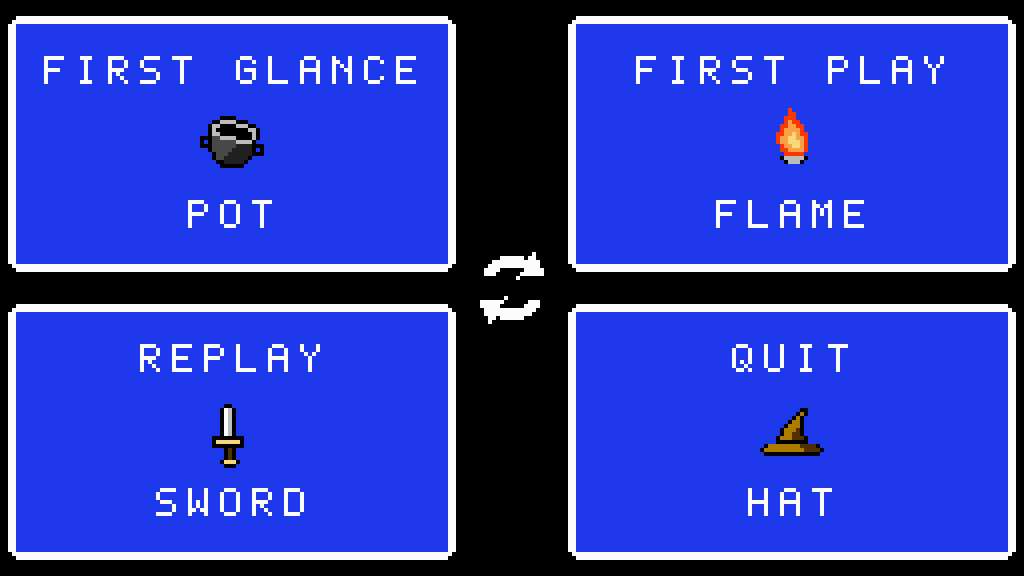
I constructed the gameplay lifecycle - First Glance, First Play, Replay, and lastly, Quit. Quit isn’t the villain, either. Step away from a game long enough, and it has time to recharge, so that one day it can pull you back in.
For the paper, we surveyed more than 450 players on online forums, and the headline was a simple one: games are different. What held for one group of games didn’t hold for another. However, it wasn’t really enough data to draw stable conclusions from.
Not Enough Data
The paper was a successful one, but when I wanted to explore the topic more, my path took me elsewhere, due to lack of sufficient data. If games are different, then every kind of game needs its own data, and gaming lacked a high amount of it. Further papers within that field would be hard-pressed to continue until I had solved this other problem entirely: how do you reason about a model when you can only afford a little data?
That led to what my PhD dissertation was ultimately about - geometric active learning, and an evolutionary algorithm I called GALE, the Geometric Active Learner. Where a standard genetic algorithm might need thousands of runs of a model to find good answers, GALE found them in a few dozen. That work was published in IEEE Transactions on Software Engineering, and took me to NASA Ames for a summer. The question about games went on a shelf. I’ll write more about GALE one day in my Software Engineering series.
Coming Back to the Question
But now I find myself returning to what I left behind. What makes a game fun?
In part, yes, the aspects of replayability are foundational. Bring a person in with playability, and keep them there with reasons to replay. All games must satisfy this. All movies, all books, all forms of entertainment, even. And as we peel back the layers, all forms of goals and objectives must have reasons to keep forming those goals, and then completing them.
And so my ultimate answer for what makes a game fun becomes rooted deep in human psychology, and in a hunt for how the human brain is wired around forming goals. Many psychologists and philosophers have already studied that topic, so there’s a solid path for this answer.
Game designers have walked part of that path too. Raph Koster, in A Theory of Fun for Game Design (2004), touches on the same sweet spot of engagement, and he identifies that everything in a game is essentially a puzzle, or really, something you need to learn. “It is the act of solving puzzles that makes games fun,” he writes. “In other words, with games, learning is the drug.” So hence, you master a game by learning and completing its puzzles.
I think it goes one level deeper. A puzzle is an objective, and learning a pattern is a goal you set and then complete. So this is foundationally about objectives, and about the psychology of how we form them. I haven’t seen anyone tie it to games quite the way I’m about to.
If that’s what games really are - things you do, goals you achieve - then a game ought to show a person by doing, not by telling. Egoraptor’s Sequelitis series on YouTube is a huge source of inspiration for me there, especially his take on how the first stage of Mega Man X teaches you to play without a single word of tutorial. That one deserves a post of its own.
But first, the Aspects of Replayability. There are six of them.
SCHEMICO
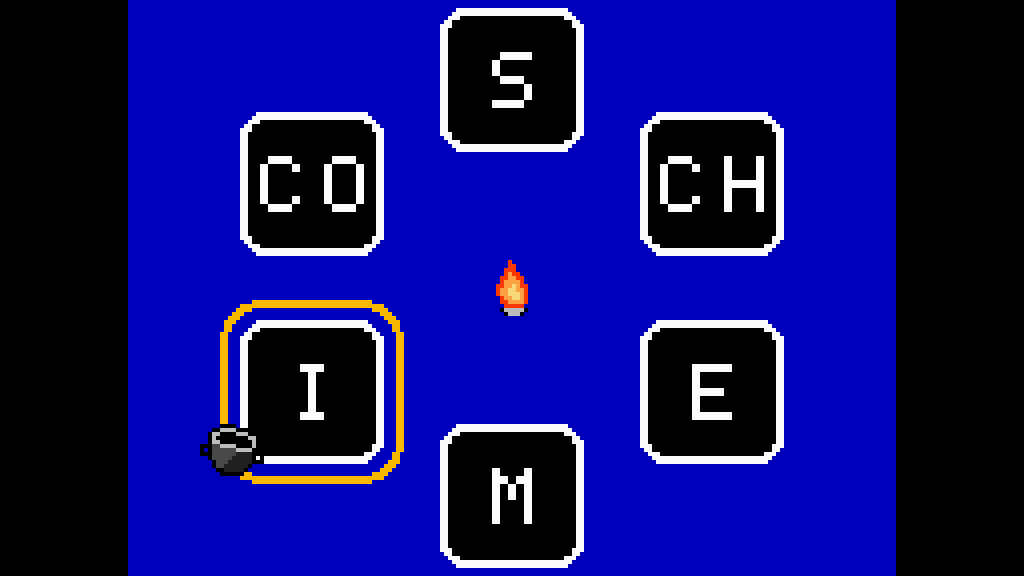
SCHEMICO is an acronym I built to help remember the six: Social, CHallenge, Experience, Mastery, Impact, and COmpletion. Lucian Smith had already described four of them in an essay on replayability in adventure games - Mastery, Impact, Completion, and Experience - and I added Social and Challenge. Each one is a unique category of goals we set for ourselves when we play.
Social
We sometimes play for social reasons. Society is a human construct in the human world, and we carry it right into our games.
In the days of the NES, games had no internet - no LAN parties, no online gatherings, hardly even any way to share how we all felt about the games. Nintendo Power barely allowed us to be truly social with games, so this aspect lived almost purely inside the household and your local community. Your family or friends would spectate as you played, or you would take turns with a best friend. A few rare titles supported true multiplayer, competitive or cooperative, at the same time. Bubble Bobble and Contra come to mind as some of the greatest NES games for Social: two players, two controllers, one screen, the same fight.
Today, in the age of the World Wide Web, the gaming community is larger than ever, and so too is the aspect of Social. Players livestream to the audiences they’ve built on Twitch, a career not before thought possible. Others create how-to content on YouTube, and GameFAQs hosts countless guides that players have contributed, all in part for social reasons.
Challenge
We sometimes play for the challenge. A talk on Challenge is hardly forgivable without first introducing the concept of flow. Mihaly Csikszentmihalyi was a famous psychologist who coined this concept. If a task is too easy, it’s boring. If it’s too hard, it’s stressful. The flow zone is the sweet spot in the middle, where a task is not too hard and not too easy, and you lose track of time doing it.
An experience is many tasks strung together. As we complete the first tasks, later ones become easier, because we’ve gotten better. So if we want to keep a person in the flow zone, we need to vary the difficulty. Movies and books do this well, with a series of increasingly tense moments followed by moments to breathe and take it all in. Games must do this as well.
Challenge describes the sort of push and pull that games bring to the player. Pull includes any elements that introduce difficulty, like a challenging boss fight. Push includes the elements that help you fight that boss - power-ups, health refills, a better weapon. A game is challenging for the right replay reasons when push and pull work together to keep us in that sweet spot. If we stay there, we’ll continue to create goals around challenge, and continue playing.
A game isn’t challenging in that sense simply because it’s all pull and no push. Deadly Towers on the NES is about as close to all pull as it gets, and hardly anyone finishes it. And all push, no pull, lands you right back at the too-easy task we started with.
Then there’s cheating. The Game Genie was built and sold to offer a little bit of magic in a bottle, to help create push where none existed. Konami’s famous “Contra Code” actually started with Gradius, as a developer’s way through a port he found too hard to beat. If you hate cheating, this next part probably isn’t what you want to hear, but sometimes cheating is warranted, as a device to help fix a game and put it where it belongs. Displaced Gamers on YouTube studies exactly that. He investigates why old games have the bugs and flaws they do, and suggests ways to fix them - like the pendant in Faxanadu, meant to make you stronger, which made you weaker instead. Those fixes usually live as Game Genie code “cheats.”
Experience
We play for the reasons of experience, the same reasons we visit different countries and explore the outdoors: a change of scenery, beautiful art, a culture to take in. We read a new book or watch a different movie for the same reasons. Experience appeals to what we see, what we hear, and to story, and a game can have all three, no different than the grand tale told by a best-selling novel. Even a sporty competitive game, or an FPS without much story, can almost tell a story of its own if its graphics, sound, and music work well together with the gameplay.
Then there’s what I call “glam and glitz,” a phrase you’ll hear from me a lot: modern games that have spent too much on graphics and experience. To be fair, inviting voice artists and modeling artists to build fantastic worlds full of wonder and joy is a respectable thing to do. But sometimes that spending ends up all glam and glitz, and no fun, and that’s the void I think indie gaming fills in. Indie studios with low capital have no choice but to build on mechanics first, mechanics that serve the other kinds of replayability. And so a market emerged where indie games often seem better at building games than the AAA companies that spend it all on glam and glitz. It’s a lesson to all developers: don’t put all your eggs into one basket.
The NES is a good reminder of how much constraint shapes this. With 2 KB of working RAM and cartridges measured in kilobytes, developer and designer alike needed to be very creative, with their backs to the wall. Studios even drew their own fonts, and you could often tell who made a game by its text alone. I miss that. With gigabytes of RAM and terabytes of storage, we feel no need to be creative that way, and everyone reuses the same font for everything. We lose a little every time we gain something, and that’s a topic I’ll come back to.
Mastery
We play for the reasons of mastery when we get good at a game, and want to keep expanding our horizons by challenging ourselves with more difficult scenarios. Some games included a harder mode, but for the most part, we have to be inventive in our search for challenge. That might mean seeking out scenarios that remove all the push that helps us fight a boss, leaving only the pull.
A large community today competes for mastery in speedrunning - trying to complete a game faster than anyone else can. This often involves a deep understanding of the game, and exploiting bugs to skip through large sections of it. But speedrunning is only one challenge that can be invented. Damageless runs, low% runs (as little push as possible), and 100% runs (all of the push, and everything else) exist too. That last one leads very naturally into the aspect of Completion - collect all the things.
Admittedly, I’m not really part of the speedrunning community, although I love watching players speed through games at a blinding pace. Social reasons bleed through here too: marathons like Games Done Quick raise money for charity while putting the masters among us on a pedestal of praise.
If I didn’t talk about TASBot, I’d be missing out on one of my favorite finds. A tool-assisted speedrun, or TAS, is built in an emulator, its button presses recorded in a movie file and replayed automatically - faster than any human could react, sometimes with unpressable combinations, like Left and Right at the same time. TASBot is Nintendo’s old R.O.B. robot, outfitted with a circuit board so it can play those runs on a real console. To see it is an experience no one enthusiastic about video games should miss. It sent me down a rabbit hole of my own: a Raspberry Pi in an arcade cabinet, playing random TAS runs as though a real player were at the controls. That’s a story for another post.
Impact
We play for the reasons of impact, the most mysterious of the aspects. Impact describes the ever-changing nature of everything you do in life. Make a decision here, and the downstream effects change everything. In a game world, impact is present when your decisions affect the later gameplay. Almost all games offer some level of impact; no two plays through the same game are ever the same. But some games offered very strong impact.
Castlevania III comes to mind, with its branching paths and the allies you can recruit, or miss, along the way. So does 1943, where you spend points rebuilding your plane however you like. Play through Final Fantasy with the recommended team, or try it again with four White Mages. That last one might even be a kind of challenge for true seekers of mastery.
A discussion on Impact could hardly be complete without the myriad MMORPGs out there - Fly For Fun among them, the very game I surveyed for my paper. These taught us that you can pick a character class, build it out, and then play again for entirely new reasons: a new starting town, new gear, new spells, an entirely new skill tree. Path of Exile is a modern game I play that soulfully survives on impact, thanks to its incredibly expansive skill tree. I find myself coming back every league - its word for a season - when everyone starts fresh with new characters in a new economy, playing entirely for reasons of impact.
Completion
We play for the reasons of completion when we form goals around collecting all the forms of push in a game, and then anything else the game offers. Completing a game is the first form of this aspect - to experience all that the story, the graphics, the sounds, and the music have to offer. Games put this on a silver platter when they track your progress for you, and then you have a catalog you must fill with stamps of completion.
Metroid Prime takes this to the extreme with its logbook, which you fill by scanning every creature and every piece of lore you can find. Super Mario Bros. 3 had some levels you didn’t need to complete, because the map offered you routes around them. You might still want to complete those stages, though, just to experience them and get them under your belt.
I like to talk about Spyro in Completion. The Spyro games on the original PlayStation are artfully cute, with their purple dragon and the gems you must collect to truly 100% the game. Spyro: Year of the Dragon even keeps an Atlas - a book with a page for every level, tracking every egg you’ve found and every one still out there. Colorful gems, minigames, and a mild challenge invite many to play for completion, and to experience the wonder and joy of watching that percentage climb to 100, and then past it, all the way to 117%. If a game is so simply pretty and enjoyable, why not give players a reason to stay a little longer and see it all?
Why Will You Play Again?
And so the six aspects of replayability are laid out. But they’re hardly worlds of their own. They can be mixed and combined to create beautiful blends, as we’ve seen throughout. It’s akin to mixing potions to create different concoctions, and sometimes something magical is discovered when two entirely unique genres meet. Castlevania and Metroid came together to form the Metroidvania. And many NES games experimented with combinative gameplay as well, like Zelda II folding side-scrolling action into an overworld RPG.
It isn’t enough to find what sells well and continue selling down that avenue. Franchises in games are important and successful, but we lose some of our creativity and exploration when we become too deeply entrenched in one world. If you’re a developer, ask yourself what you can do to help broaden horizons and retain some of that original creativity.
And if you’re a player, the next time you pick up a game, think about these reasons for replay. Ask what you really enjoy, to better know thyself. Why are you playing, and why will you continue to play again?
In my book, What Makes a Game Fun, these six aspects are exploded into fine detail as I apply them to old NES games. And if you’re interested in being the first to know when it’s published, sign up here.